Does homeowners insurance cover roof algae or soft washing cleanup?
By Ethan Marsh · Updated 2026-06-04
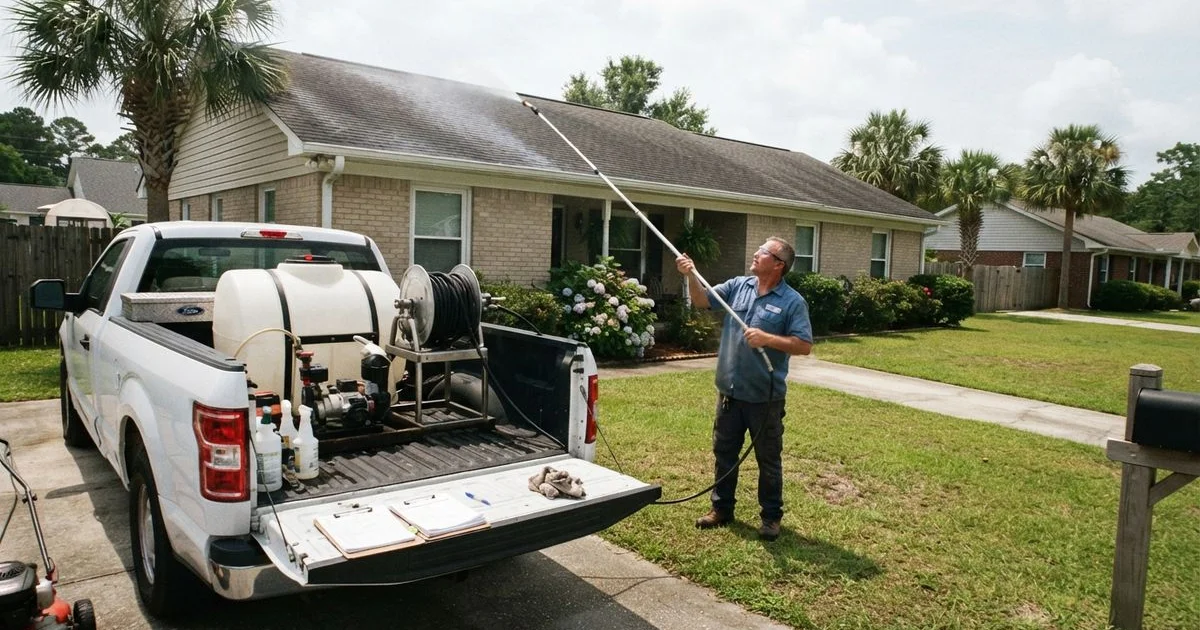
Black streaks and algae on a roof are one of the most common reasons Myrtle Beach homeowners look into roof soft washing, and one of the first questions that comes up is whether insurance picks up any of the cost. The short answer for most policies is no, but the full picture depends on why the roof needs cleaning in the first place.
This is general information about how homeowners insurance typically treats roof cleaning, not advice about your specific policy. Confirm coverage details directly with your insurer or agent.
Why routine algae cleanup usually isn’t covered
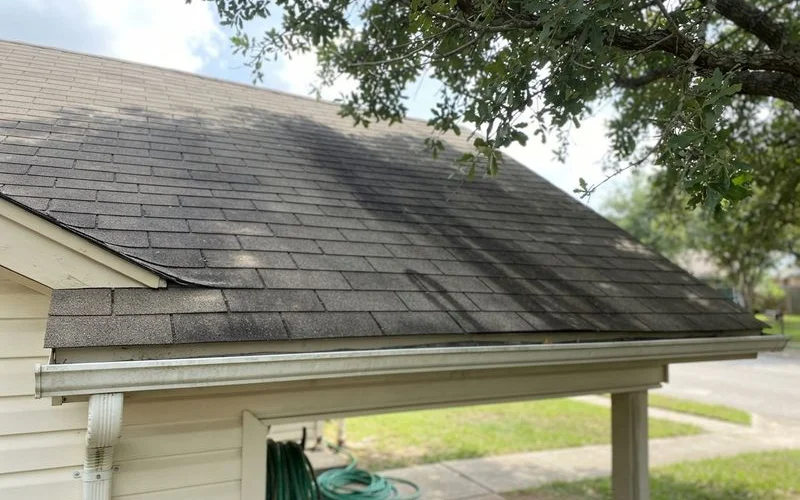
Homeowners insurance is built around sudden, accidental damage, not the slow wear that comes from living in a humid, coastal climate. Gloeocapsa magma, the algae responsible for the black streaks on asphalt shingles, spreads gradually over months or years as spores travel between roofs. Because that process is gradual and expected rather than a one-time event, insurers classify it as maintenance, the same category as pressure washing a driveway or cleaning gutters. Maintenance items are the homeowner’s responsibility in nearly every standard policy.
The same logic applies to general fading, oxidation, and light mildew film on siding or a roof. If it built up slowly from sun, humidity, or salt air, it’s maintenance. If it happened in a single identifiable event, it may be a different story.
When roof cleaning-related costs might be covered
A few scenarios sit closer to the line:
- Storm damage that also needs cleanup. If a storm knocks debris onto your roof or a tree limb comes down, the repair itself may be covered, and cleanup directly tied to that repair is sometimes included. The routine algae that was already there beforehand typically is not.
- Water intrusion from neglected buildup. If years of untreated algae or moss growth caused actual damage, like lifted shingles or an active leak, insurers may cover the resulting interior damage while still excluding the cleaning that would have prevented it.
- Mandated cleaning before renewal. Some insurers require visible staining be addressed as a condition of coverage, which is a request, not a covered expense. You pay for the cleaning; not doing it can affect your policy.
Roof condition and coastal insurers
Insurers writing policies along the Grand Strand pay closer attention to roof condition than carriers in most inland markets, given the storm exposure here. Some require a roof inspection, sometimes called a four-point inspection, before writing or renewing a policy on an older home. That inspection looks at the roof’s age, material, and visible condition, and heavy algae staining or moss buildup can read as a sign of neglect even when the shingles underneath are structurally fine. Keeping the roof reasonably clean on a normal maintenance schedule can make that inspection go smoother, even though the cleaning itself isn’t a covered expense.
If you do file a storm-related claim, take dated photos of the roof beforehand if you have any, and again immediately after the storm, before any cleaning happens. That documentation helps your adjuster separate storm damage from pre-existing algae or wear, which matters if part of your claim depends on showing what changed and when.
What this means for budgeting the job
Since coverage is unlikely, it makes sense to budget roof soft washing the way you would any other maintenance item, on a schedule rather than waiting for a claim that probably won’t come through. Most asphalt shingle roofs in this climate hold up well for two to three years between soft washes, sooner if the home sits in heavy shade or close to the marsh where moisture lingers longer. Treating it as a predictable line item, rather than an emergency expense, also gives you time to compare quotes instead of booking the first available company. Skipping a professional to save that budget with a DIY attempt carries its own risks on a sloped roof; our guide on whether DIY roof pressure washing is safe covers what to weigh before climbing up there yourself.
Questions worth asking before you assume either way
Every policy is different, and the fastest way to know where you stand is to ask directly rather than guess:
- Does my policy distinguish between storm-related roof damage and gradual staining?
- Has my insurer flagged roof condition in a recent inspection or renewal notice?
- If a tree or storm event caused visible damage, is algae cleanup included in that specific claim, or billed separately?
A quick call to your agent, ideally before you book a cleaning, settles the question for your specific situation far better than a general rule can. Our pressure washing directory covers this and every other exterior cleaning category in the Myrtle Beach area, and our methodology explains how we score and rank the businesses listed so you can shortlist with more than a guess.
FAQ
- Will my homeowners policy pay for roof soft washing?
- Almost never for routine algae or black streak cleanup. Insurers treat that as ordinary maintenance, the same way they treat gutter cleaning or repainting, since it results from gradual exposure rather than a single event.
- What roof damage does homeowners insurance typically cover?
- Sudden, specific events: wind tearing off shingles, a tree branch puncturing the roof, or hail impact. Those are typically covered subject to your deductible. Gradual algae growth over months or years is treated differently.
- Can a dirty or algae-covered roof affect my insurance at renewal?
- It can. Some insurers flag visible roof staining or wear during inspection photos and may ask for cleaning or repairs before renewing or adjusting a quote. Check your policy or ask your agent directly rather than assuming either way.
- Does my HOA cover roof cleaning instead?
- Some HOAs handle exterior maintenance on attached or shared roofs as part of dues, but most single-family home HOAs in this area only enforce appearance standards and leave the cost to the homeowner. Check your covenants.