Pressure washing in a rental or HOA community: who's responsible
By Ethan Marsh · Updated 2026-07-07
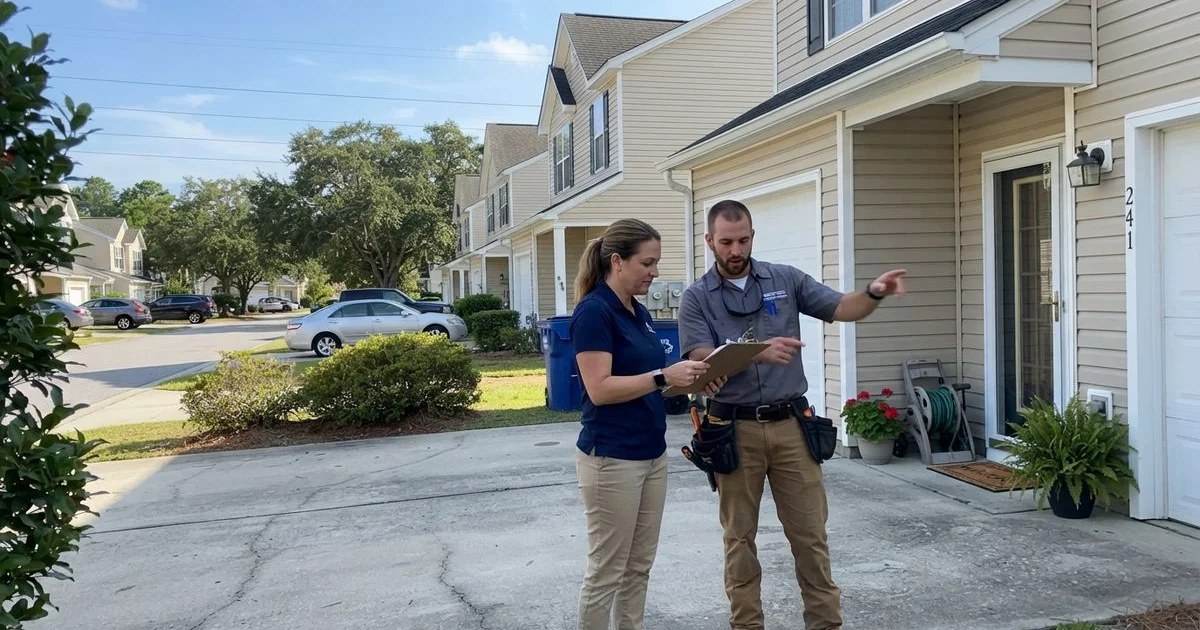
Pressure washing responsibility gets genuinely confusing once more than one party has a stake in the property, a landlord and tenant, two neighbors sharing a fence line, or an HOA with its own appearance standards. Here’s how it typically breaks down for deck and fence cleaning and other exterior work in a rental or HOA setting.
Landlords and tenants
General exterior maintenance, including algae, mildew, and mold that build up naturally over time on siding, decks, and fences, is almost always the landlord’s responsibility as part of keeping the property habitable and in good condition. This is treated the same as other routine upkeep, like gutter maintenance or exterior paint, rather than something a tenant is expected to handle or pay for.
Where it gets less clear is damage versus normal wear. If a tenant caused specific staining, a grill left directly on a wood deck, chemical spill, or similar, that could reasonably be charged back at move-out. Ordinary algae growth from humidity and shade almost never falls into that category, since it would have happened on the property regardless of who was living there. If you’re a tenant facing a move-out charge for general exterior condition, check your lease’s specific language on normal wear versus damage before assuming the charge is valid.
Shared fences between neighbors
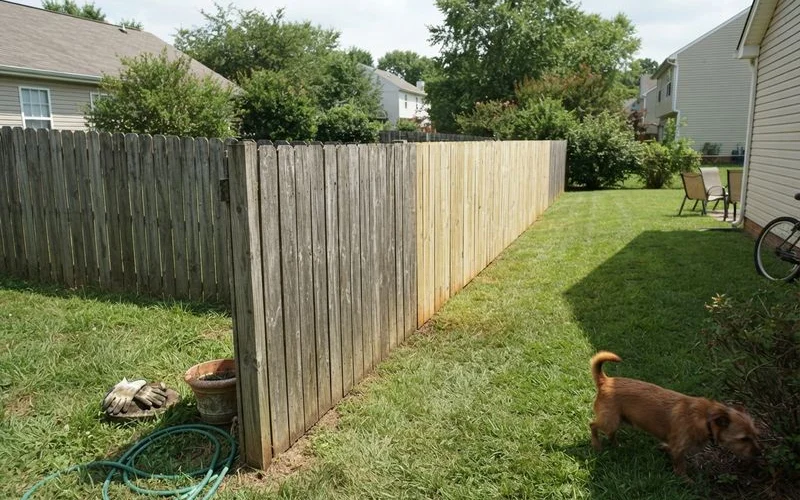
Fence ownership and maintenance responsibility isn’t always obvious just by looking at a property line. In some neighborhoods, a fence directly on the boundary is jointly owned, with maintenance and cleaning costs split evenly. In others, one property owns the fence outright, often the side the finished, “good” face points toward, and is solely responsible for its upkeep. If you’re not sure which applies to your situation, your property survey or original purchase disclosures sometimes note it, and your HOA, if you have one, may have its own rule that overrides informal neighborhood assumptions.
HOA communities
Most HOAs in the Myrtle Beach area set appearance standards for individual homes, requiring owners to keep siding, driveways, and visible exteriors reasonably free of mold, mildew, and algae staining, but leave the actual cost and scheduling to the homeowner. Where HOAs more commonly step in directly is for shared or attached elements: a community fence line along a common area, an attached building exterior in a townhome development, or amenity structures like a clubhouse or pool deck. These are frequently covered by HOA dues as part of routine community maintenance.
| Situation | Who typically pays |
|---|---|
| Rental property, general exterior upkeep | Landlord |
| Rental property, tenant-caused damage | Tenant, if documented as beyond normal wear |
| Private fence, sole ownership | The owning property |
| Shared boundary fence | Split, per neighborhood custom or agreement |
| HOA shared or attached structures | Often covered by HOA dues |
| Individual home exterior in an HOA | Homeowner, even if HOA sets the appearance standard |
Vacation rentals and property managers add another layer
If the property is a short-term or vacation rental rather than a standard lease, responsibility usually sits with the owner or the property management company rather than any single set of guests, but the schedule tends to be tighter. A deck or fence that guests use heavily, and that gets exposed to sunscreen, beach sand, and constant foot traffic, often needs cleaning on a shorter interval than a standard owner-occupied home would. Property managers overseeing several units sometimes set a fixed cleaning schedule across their whole portfolio rather than waiting for visible staining on each individual property, which simplifies budgeting even if it means cleaning slightly ahead of strict need on some units.
What to check before assuming either way
If you’re a tenant, review your lease for language specifically addressing exterior maintenance and move-out condition. If you’re dealing with a shared fence, check your property survey or ask a neighbor directly rather than assuming a 50/50 split is automatic. And if your HOA has sent an appearance notice, read the actual covenant language for what’s required and by when, since compliance windows vary significantly between communities.
Our pressure washing directory lists deck and fence cleaning providers across the Myrtle Beach area, and our methodology explains how we score and rank the businesses listed.
FAQ
- Is my landlord required to pressure wash the exterior of my rental?
- It depends on the lease and local rules, but general exterior upkeep, including mildew or algae buildup on siding, decks, or fences, is typically the landlord's responsibility as part of maintaining the property, not the tenant's.
- Can a tenant be charged for pressure washing when they move out?
- Sometimes, but usually only for damage beyond normal wear, like a tenant's own stains or neglect, not for routine algae growth that would have happened regardless of who lived there. Check your lease's specific language on move-out cleaning.
- Who owns a fence between two properties, and who pays to clean it?
- This varies by neighborhood and sometimes by the original construction agreement. Some shared fences are jointly owned with split maintenance costs; others belong entirely to one property. Check your property survey or ask your HOA if you're unsure.
- Does an HOA ever pay for pressure washing directly?
- Some HOAs cover cleaning of shared or attached structures, like a community fence line or an attached building exterior, as part of dues. Individual home exteriors on private lots are almost always the homeowner's own cost.