Pressure washing wastewater and HOA rules in South Carolina
By Ethan Marsh · Updated 2026-06-19
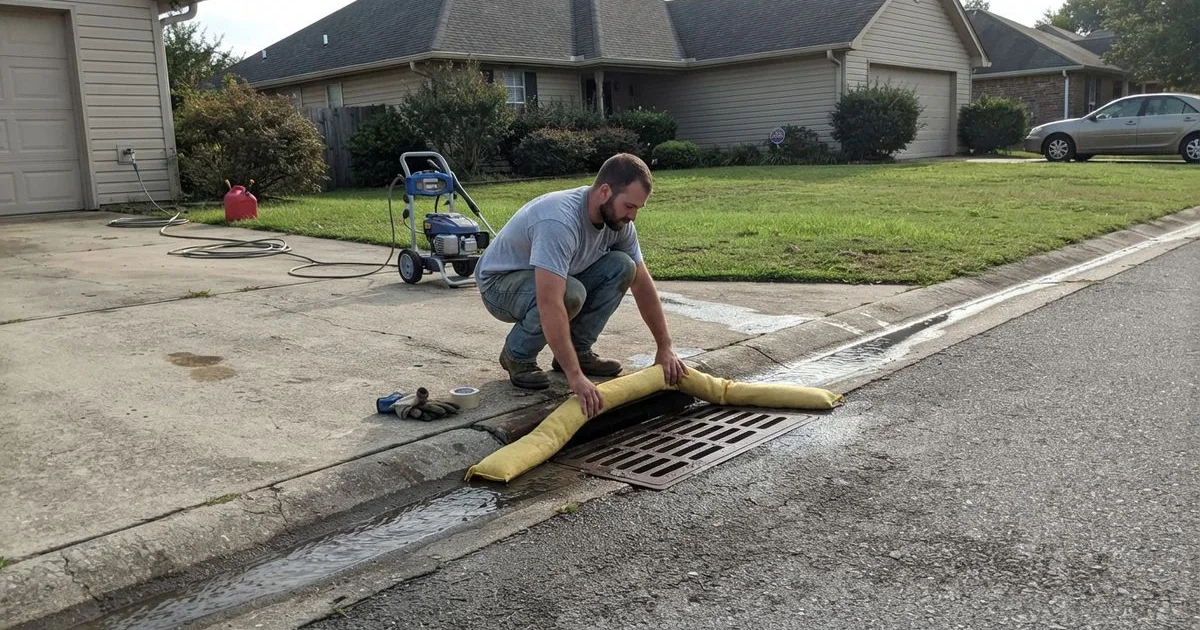
This is general information about how wastewater and HOA rules commonly apply to pressure washing in South Carolina, not legal advice. Requirements vary by municipality and by HOA, so confirm specifics with your local government or property management before a job that involves chemical runoff.
Coastal South Carolina has more environmental rules around wash water than most people expect, largely because a lot of storm drains in this area lead directly toward the Intracoastal Waterway or the ocean without going through a treatment plant first. If you’re planning eco-friendly or low-water cleaning, or just want to understand what a responsible contractor should be doing, here’s what typically applies.
Why runoff rules exist here
Plain rinse water generally isn’t the concern. The issue is water mixed with cleaning solution, sodium hypochlorite, degreasers, or other chemicals used to kill algae and mold, running off a driveway or siding and heading straight into a storm drain. Unlike sewer systems, storm drains in most South Carolina municipalities carry water directly to nearby creeks, marshes, or the ocean without filtering it first. That’s why many local governments and utilities restrict chemical-laden runoff from entering storm drains, even from a routine residential cleaning job.
What responsible containment looks like
A contractor who takes this seriously typically does one or more of the following on a job that uses chemicals:
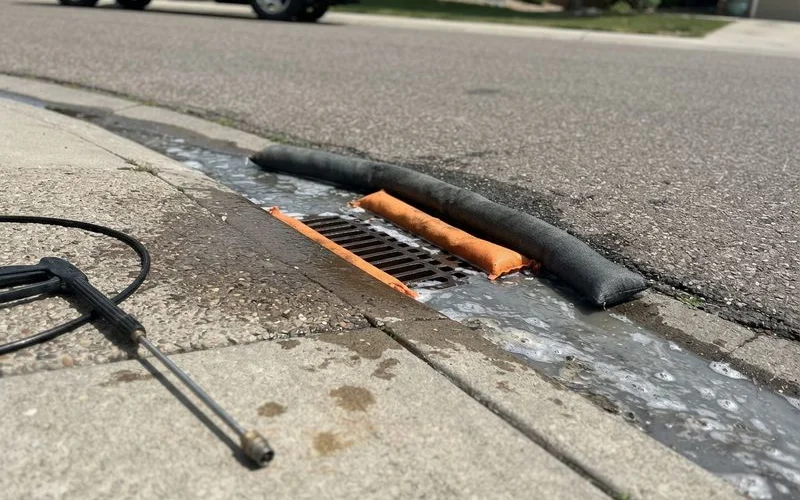
- Diverts and captures runoff using a wet vac, containment berm, or absorbent barrier around storm drain openings before starting.
- Uses lower-concentration, biodegradable formulas where the job allows it, reducing the environmental impact even if some runoff does escape containment.
- Times dilution properly, since heavily diluted rinse water breaks down faster and poses less risk than a concentrated chemical mix reaching a drain.
- Avoids working directly over storm drains when possible, redirecting the work area or covering the drain temporarily.
If you’re hiring for a driveway, parking lot, or commercial property near a drain, it’s reasonable to ask directly how the crew plans to handle runoff before they start. Containment protects the waterways, but those same chemicals need care around your own yard too; our guide on keeping pets, plants, and kids safe during a pressure washing visit covers precautions on your own property.
HOA rules: a separate but related issue
Apart from environmental runoff rules, many HOA communities in the Myrtle Beach area have their own exterior appearance standards written into the community covenants. These commonly address:
- Visible mildew, algae, or mold staining on siding, roofs, or driveways.
- A required cleaning frequency or a maximum time before staining must be addressed after a notice.
- In some communities, restrictions on approved cleaning methods or contractors for shared or attached structures.
If your HOA sends a notice about exterior condition, check your specific covenants for the compliance window rather than assuming a standard timeframe, since this varies significantly between communities. Some HOAs handle cleaning of shared elements, like an attached roof section or a community fence, as part of dues, while individual home exteriors usually remain the homeowner’s responsibility.
Commercial properties and parking lots
The rules tend to get stricter for commercial sites. A shopping center, restaurant, or parking garage often generates more concentrated runoff, oil residue mixed with cleaning chemicals from a parking lot, or grease and food residue from a restaurant entryway, and larger properties are more likely to sit closer to a storm drain that serves a wider area. Property managers in this area commonly require proof of insurance and a written runoff containment plan before approving a contractor, which is one reason commercial pressure washing quotes take longer to put together than a simple residential driveway job. If you manage a commercial property, ask your contractor directly whether they’ve handled similar sites and what their containment process looks like before signing off.
What this means when you’re hiring
Two practical takeaways: first, if your property backs up to a marsh, canal, or storm drain, ask any contractor how they’ll contain chemical runoff before work starts, not after. Second, if you’ve received an HOA notice, read your covenants for the specific requirement rather than guessing, and keep a record of when the cleaning was completed in case you need to show compliance later.
For more on how businesses in this directory are scored, including signals around licensing and professionalism, see our methodology. Our pressure washing directory lists eco-friendly and low-water cleaning providers serving the Myrtle Beach area.
FAQ
- Is it illegal to let pressure washing water run into the street?
- Many South Carolina municipalities restrict water containing chemicals or soap from entering storm drains, since those drains often lead directly to local waterways without treatment. Plain water runoff is usually treated differently than water mixed with cleaning solution.
- Can my HOA require me to pressure wash my home?
- Yes, if it's written into your covenants. Many HOAs in the Myrtle Beach area include exterior appearance standards that cover mildew, algae staining, and general upkeep, and can issue a notice requiring cleaning within a set timeframe.
- Do I need a permit to pressure wash my own house?
- Typically no for routine residential cleaning of your own property. Some commercial properties, larger developments, or jobs near protected waterways may have additional requirements, so check with your local government if you're unsure.
- Who's responsible for wastewater rules, me or the company I hire?
- Both, practically speaking. A professional company should know local containment requirements, but as the property owner you're the one an HOA or municipality will contact first if there's a complaint, so it's worth confirming how a contractor handles runoff before booking.