Who's liable when pressure washing damages your property
By Ethan Marsh · Updated 2026-06-22
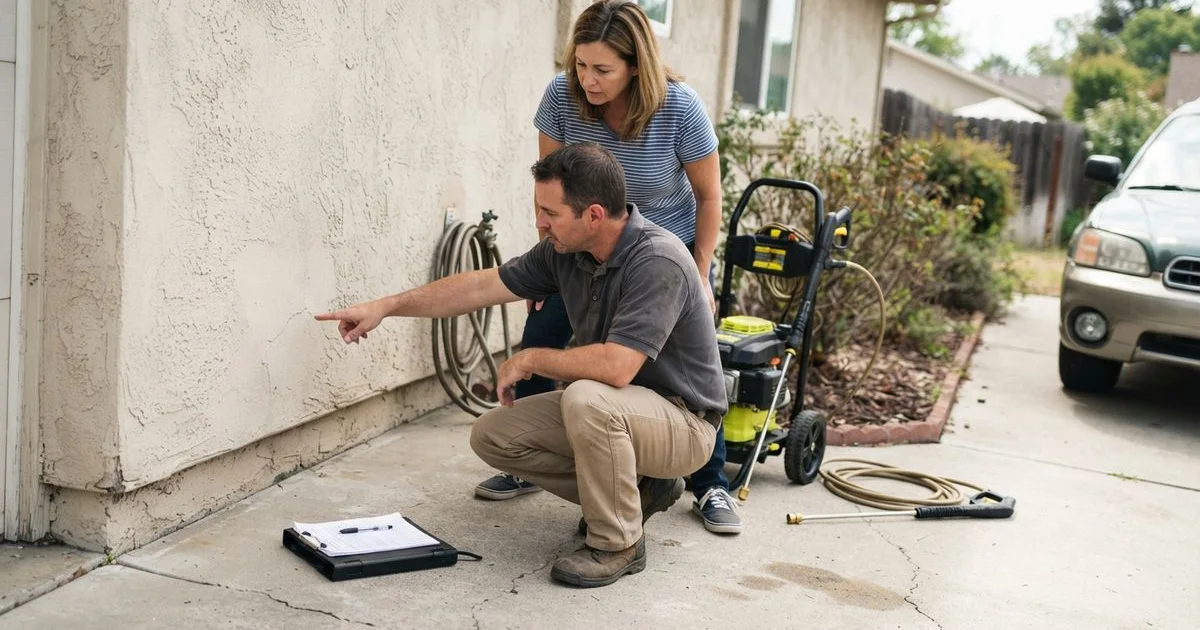
This is general information about how liability commonly works when a pressure washing job causes property damage, not legal advice for your specific situation. For an actual dispute, consult a local attorney or your state’s consumer protection office.
Most pressure washing jobs go fine, but stucco can crack, paint can strip, and delicate wood or vinyl siding can splinter or lift under the wrong pressure or technique. When something does go wrong, knowing who’s actually responsible, and what to do about it, saves a lot of stress.
Who’s typically on the hook
In general, a company is responsible for damage that resulted from their work, particularly if it stemmed from using the wrong pressure, wrong nozzle, or wrong chemical for the surface. This is treated similarly to any contractor negligence claim: if a reasonably careful crew wouldn’t have caused that damage, the company that did it is generally liable for the repair cost. This is exactly what a contractor’s general liability insurance exists to cover, and it’s the main reason licensing and insurance matter more than they might seem to at first glance.
Pre-existing damage is a different category. If your siding already had a crack or your paint was already peeling before the crew arrived, that’s not something a pressure washing company caused, which is why a walkthrough and documentation before the job starts protects both sides.
Why insurance verification matters before you hire
A company without general liability insurance puts the entire risk on you. If they cause damage and don’t have coverage, or refuse to acknowledge responsibility, your only real path is pursuing them directly, which can mean small claims court, a formal demand letter, or in rare cases a longer legal process. Confirming insurance before the job starts is a simple step that changes your entire position if something goes wrong.
Ask directly: “Can you provide proof of general liability insurance?” A legitimate company should be able to produce this without hesitation. Hesitation or vague answers are a signal worth taking seriously. Insurance is just one piece of vetting a company properly; our guide on how to vet a pressure washing company walks through licensing and other red flags to check before you book.
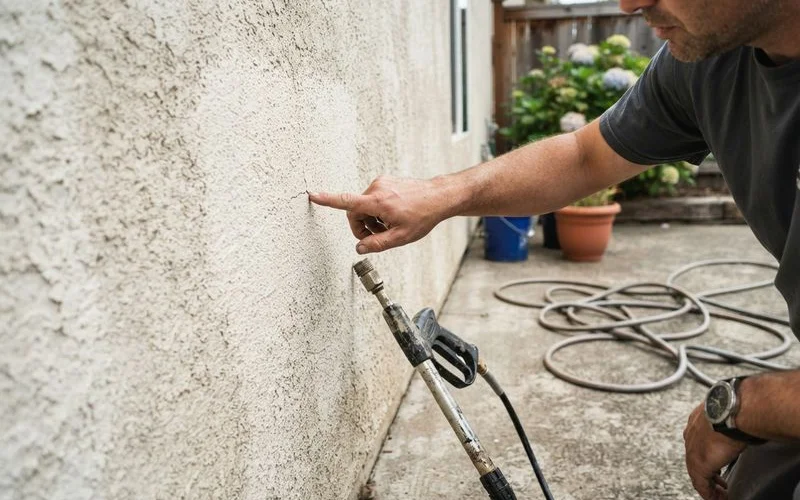
What to document before and after
| When | What to capture |
|---|---|
| Before the job | Photos of siding, driveway, landscaping, and any existing wear or damage |
| During the walkthrough | A verbal or written note of anything the crew flags as pre-existing |
| Immediately after | Photos of any new damage, taken before further cleaning or repair attempts |
| The written quote | Keep it on file, it establishes the agreed scope and helps clarify what was and wasn’t included |
This documentation matters most in the gap between “the company says it was already like that” and “you’re certain it wasn’t.” Photos from before the job settle that question quickly.
Landscaping damage is its own common category
Property damage claims aren’t limited to siding and structures. Chemical overspray or runoff killing grass, shrubs, or flower beds is one of the more frequent complaints in this niche, and it’s handled the same way as any other damage claim: if the company’s process was careless, applying a strong chemical without pre-wetting nearby plants, or letting runoff pool against a flower bed, that’s generally their responsibility. A careful crew rinses landscaping before and after chemical application specifically to prevent this, so ask about that step ahead of time if you have plants close to the work area.
If damage does happen
Contact the company in writing as soon as you notice the issue, describing what happened and attaching photos. A reputable company will typically want to inspect the damage themselves and either repair it or cover the repair cost through their insurance. If the company is unresponsive or denies responsibility without a reasonable explanation, and you have documentation showing the damage wasn’t there before, your options include a formal written demand, filing a complaint with your state’s consumer protection office, or small claims court for repair costs within the applicable limit.
Choosing a licensed, insured company from the start is still the best protection. Our pressure washing directory lists providers across the Myrtle Beach area, and our methodology explains the factors we weigh, including signals around professionalism and consistency, when scoring the businesses listed.
FAQ
- Is a pressure washing company responsible if they damage my house?
- In most cases, yes, if the damage resulted from their work and they were negligent, using excessive pressure on a delicate surface, for example. A company's general liability insurance is what typically covers a legitimate claim, which is why verifying insurance before hiring matters.
- What if the company doesn't have insurance?
- Without insurance, you'd likely need to pursue the company directly for repair costs, through negotiation or small claims court if necessary. This is the main reason to confirm insurance before work starts rather than after damage happens.
- Does my homeowners insurance cover damage caused by a contractor I hired?
- Sometimes, but it varies by policy, and filing a claim against your own policy for a contractor's mistake can affect your rates. The contractor's liability insurance is usually the more direct path if they're insured.
- What should I do immediately after noticing damage?
- Photograph the damage right away, before any further cleaning or repair, and contact the company in writing describing what you found. Keep the original quote or contract, since it establishes what work was agreed to.